Founded 1980
Chair:
Secretary:
Treasurer:
Graham Smith
Jan Thompson
Graham Mumby-Croft
 Home
Home
Paul Laxton



Barbara E Treen.
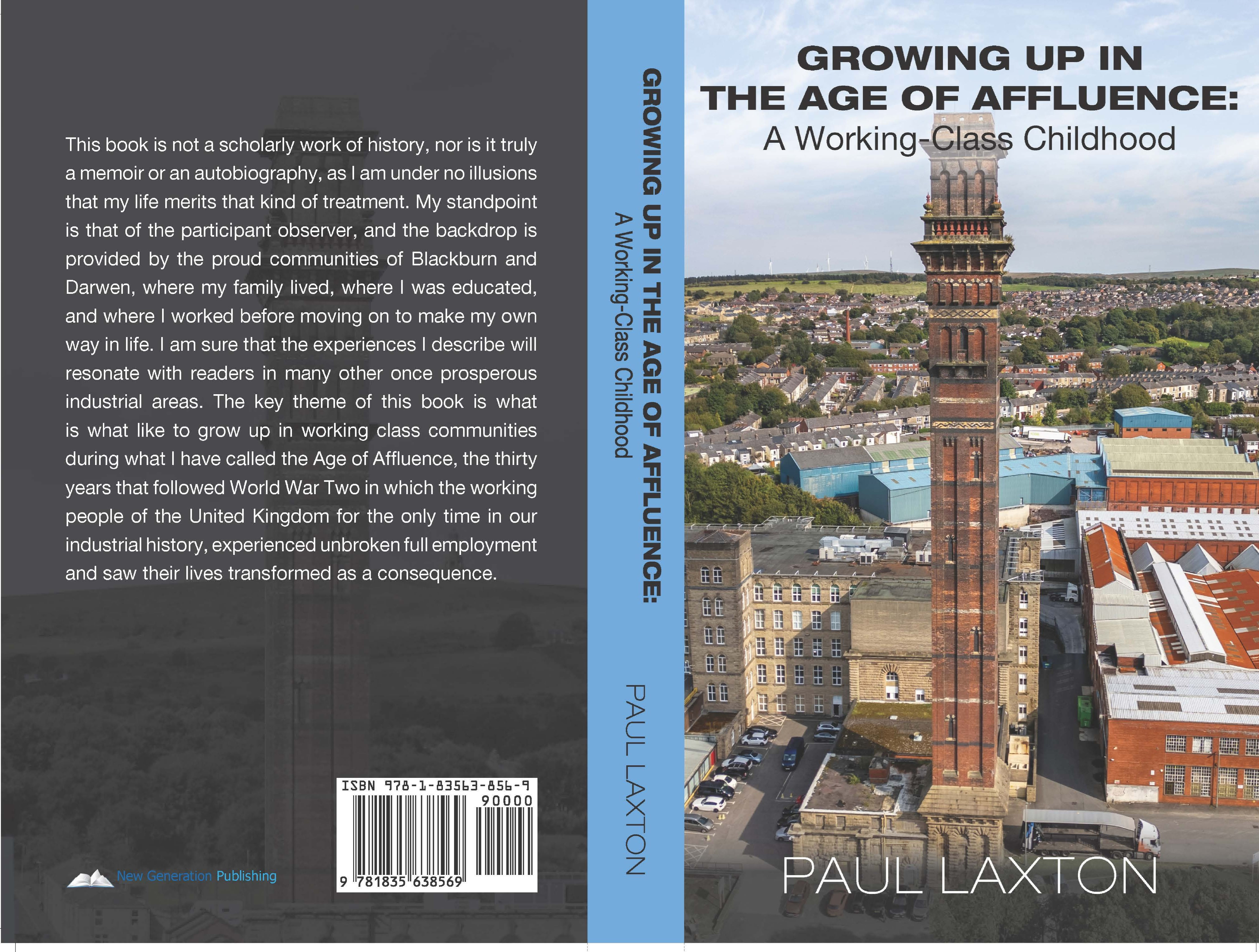
GROWING UP IN THE AGE OF AFFLUENCE:
A WORKING-CLASS CHILDHOOD
Author Paul Laxton: A Review by BARBARA TREEN
Where to start! This is a comprehensive and passionate description of the author’s world as he grew up beginning in the 1950s. Although technically an autobiography the author provides so much more than a superficial glimpse into the past. Every memory is surrounded by an extremely detailed historical picture and analysis of the age. He particularly reflects on social mobility and the way social class affected and still affects one’s ability to progress to the upper echelons of life.
Readers may particularly enjoy particular chapters more than others depending on their own memories of the time and interests. Chapters include for instance the era’s music, Blackburn Rovers and children’s television. The author acknowledges his readers may choose to skip sections and to be honest the passionate and encyclopedic section on Blackburn Rovers is one section I skipped over not sharing the same passion or knowledge of the game. The following section on terrace culture drew me back in however to learn about how the young Grammar School boy risked life and limb at the hands of the ‘greasers’ and ‘skinheads’. I learned much of the aggro apparently occurred due to the tradition of changing ends at half-time!
I am in awe of Paul’s detail. As well as memory this book must have required comprehensive research over many months, even years. It is simply astonishing. I now know what days of the week I must have watched each children’s TV programme! And know all there is to know about Dr Who and the BBCs ineptitude at hanging onto its archives.
I am ashamed at my lack of recall about my life even as an adult. Paul has incredible recall. He remembers for instance what he did on day one at primary school and paints vivid pictures of all his teachers and many fellow pupils. In particular his schooldays are fascinating where he reveals his affection for those around him he respects and shines an uncompromising light on areas of corruption. His accounts of school life particularly his junior school are harrowing for the level of cruelty and physical brutality meted out to young children. His respect for the severe but often enlightened teachers in secondary school is clear however.
This is not an ‘easy read’ given the level of complex detail in every chapter but it is an impressive work. Paul admits a liking for obscure facts and there are plenty here for the reader to enjoy.
Barbara Treen